

Decarbonisation: Early Collision Avoidance Decisions Can Cut Emissions
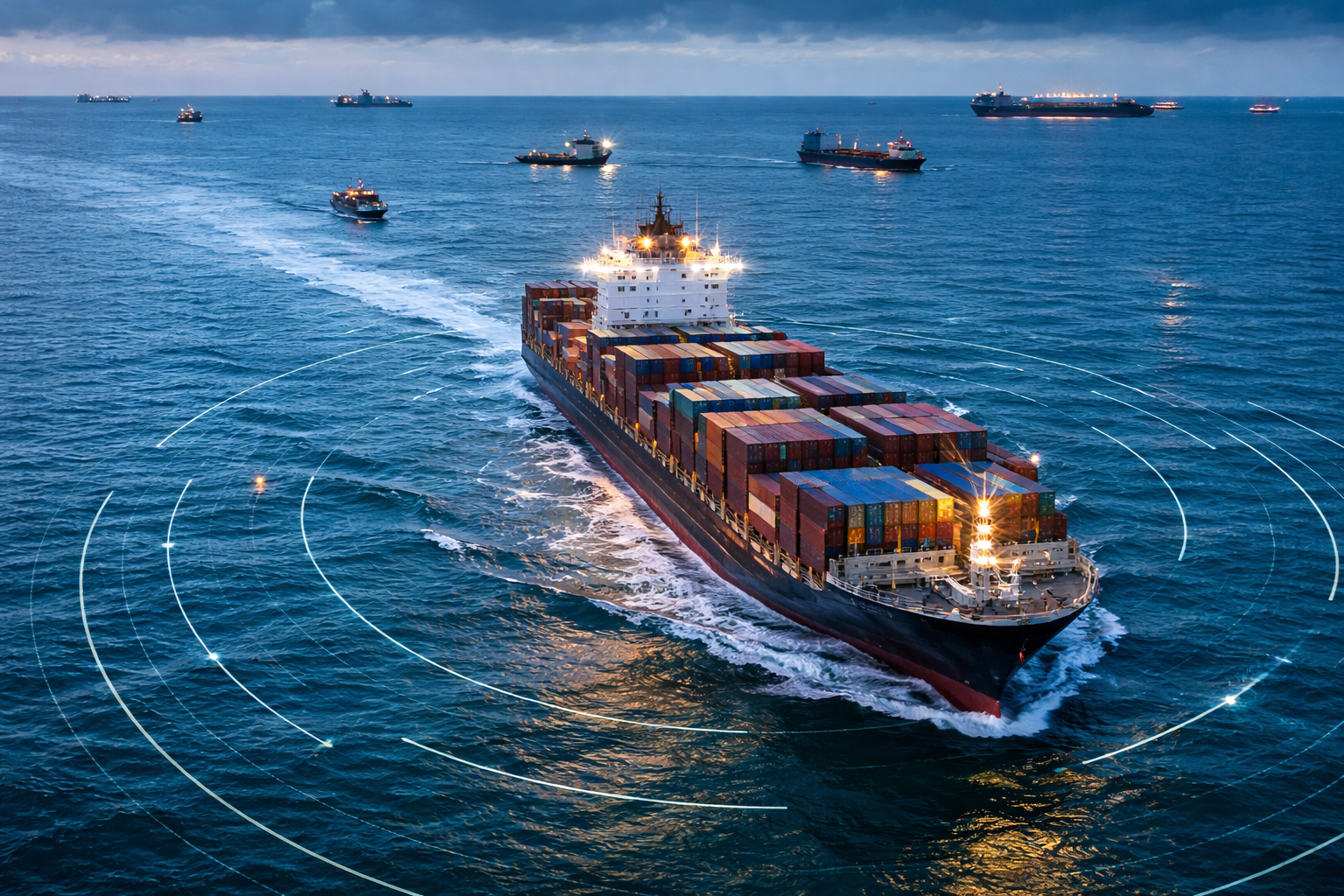
Maritime decarbonisation is usually framed as a fuel and propulsion challenge. But there’s another lever available right now, on every voyage: operational stability.
When collision avoidance decisions happen late, ships tend to burn more fuel. Not because the route suddenly changes dramatically, but because last-minute actions often create inefficient manoeuvring:
harder turns and overswings
more speed changes (slow down and catch up)
extra distance before rejoining the intended track
That’s a safety problem and an emissions problem.
Why “late” becomes carbon-expensive
Collision avoidance is not “free.” Abrupt manoeuvres increase drag and disrupt the vessel’s speed profile. And in real operations, crews don’t always slow down early when risk is rising, often due to commercial pressure, ETA anxiety, or habit. Gard’s loss-prevention guidance highlights this reality and warns that hard helm actions without timely speed reduction can lead to large overswings that are difficult to control.
The decarbonisation takeaway is simple: if you can make avoidance earlier and smoother, you reduce energy waste.
What SafeNav changes
SafeNav is a safety product first. A COLREG-aligned decision support system built to help navigators and ROCs take earlier, clearer, compliant action.
From an emissions perspective, that translates into fewer moments where a bridge team is forced into “reactive driving.” In practice, SafeNav aims to reduce:
speed volatility during close-quarters situations
unnecessary deviation from intended track
high-energy manoeuvring caused by delayed decisions
This is not voyage routing. It’s making collision avoidance less disruptive to the vessel’s efficiency.
What we can realistically claim today
It’s tempting to quote big fuel-saving numbers from broad voyage optimisation studies. But those include multiple levers (routing, weather, trim, engine settings, port coordination). Collision avoidance is only one slice of the picture.
So our claim stays conservative:
In encounter-heavy operations, earlier and smoother collision-avoidance behaviour can support low single-digit fuel and CO₂ reductions - up to ~3% - depending on traffic density and operating profile.
That’s the right investor-grade framing: small, believable, and undoubtably meaningful at scale.
Turning fuel saved into CO₂ saved
For emissions accounting, the strongest part of this story is that it’s measurable.
Once fuel savings are quantified (via fuel flow, shaft power, or validated performance models), CO₂ savings follow directly using IMO conversion factors. For example, the IMO commonly used carbon factors are approximately:
HFO: ~3.114 t CO₂ per tonne of fuel
Diesel/Gas Oil: ~3.206 t CO₂ per tonne of fuel
That means a 1-3% fuel reduction is effectively a 1–3% CO₂ reduction, and it can be reported in tonnes with transparent assumptions.
How we’ll prove it
The best way to make decarbonisation claims “real” is to tie them to operational KPIs you can show, audit, and repeat.
SafeNav’s decarbonisation validation approach is straightforward:
Measure how early action happens
time-to-first-action / TCPA at first action
Measure how disruptive avoidance is
speed variability during encounter windows
track deviation miles before rejoining route
Translate operational improvements into fuel/CO₂
fuel delta → CO₂ delta using IMO factors
This allows owners, ROCs, and partners to see whether “earlier and smoother” is happening, and what it means in real fuel and CO₂.
The bottom line
SafeNav’s decarbonisation value is a co-benefit of safer navigation:
earlier decisions
smoother compliance
fewer energy-wasting last-minute manoeuvres
measurable low-single-digit fuel and CO₂ reduction potential in encounter-heavy operations
In a sector facing tightening climate targets and cost pressure, even low single digits matter, especially when they come from a tool that is primarily built to reduce collision risk.
Sources we reference:
• IMO Third GHG Study (speed vs fuel sensitivity): https://greenvoyage2050.imo.org/resources/third-imo-ghg-study-2014/
• Gard (why speed isn’t reduced in time and overswing risk): https://gard.no/insights/what-stops-you-from-reducing-speed-to-avoid-a-collision/
• Skuld (high-traffic straits context): https://www.skuld.com/4a24b7/contentassets/d0459c5f5be24a1a938a9eece0ebcb15/collisions-in-the-malacca-and-singapore-straits.pdf
• IMO fuel→CO₂ conversion factors (CF): https://wwwcdn.imo.org/localresources/en/KnowledgeCentre/IndexofIMOResolutions/MEPCDocuments/MEPC.308%2873%29.pdf
