

SafeNav insights from the MASRWG 2026 conference: AI, COLREGs, US momentum, and hydrographic data readiness
SafeNav attended the Maritime Autonomous Systems Regulatory Working Group (MASRWG) conference online, where discussions across two days centred on the following “hot” maritime autonomy themes: Frontier AI and operator burden, human–machine collaboration, COLREG-compliant collision avoidance, trajectory planning, US market and funding dynamics, and hydrographic data readiness (S-100).
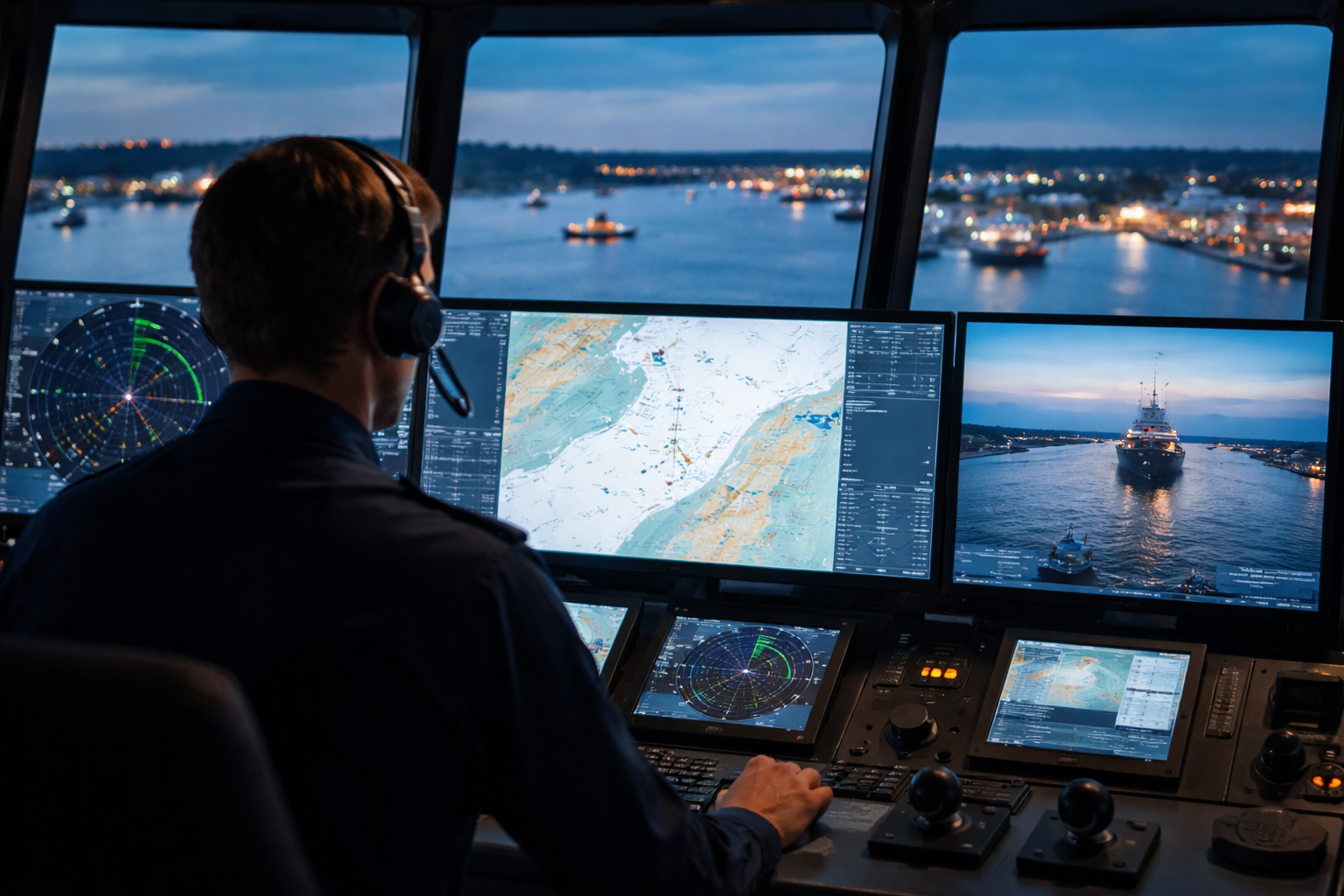
Industry Highlights:
Frontier AI + MASS operations (operator burden, mixed data, bridge comms):
Speakers stressed that autonomy must remove operator burden without reducing safety, especially in a “mixed economy” of good and degraded data. A key challenge is reconciling data feeds that disagree (e.g., AIS vs radar vs visual), handling visibility and “in sight” assumptions, and keeping clear allowances for operator override. Ports and constrained waters were highlighted as areas where autonomy adds value first, while vessel-to-vessel comms for collision avoidance remains higher risk. Unfinished technical problems include reliably identifying lights and shapes (COLREG-relevant classification) from cameras.
AI Navigator & sailor (continuous risk evaluation, good seamanship, LLM security/accountability):
Collision risk evaluation was framed as continuous, not a one-time CPA/TCPA check, requiring reassessment as scenarios evolve. The discussion referenced “off-the-shelf” approaches such as Informed RRT*-style trajectory generation, paired with maritime-specific decision logic. Speakers also called out the limits of general-purpose AI for navigation: off-the-shelf LLMs can describe scenarios, but are not reliable enough “as-is” for safety-critical decision making. The Q&A flagged adversarial AI / jailbreaking, the need for cyber-physical resilience across the whole architecture, and the persistent accountability question: who is responsible in remotely supervised operations?
US market update (autonomy momentum, regulation-by-practice, and workforce narrative):
The US market was described as strongly focused on autonomous shipping and willing to invest, but the practical reality is that momentum often moves through existing programmes and extensions rather than many brand-new proposals each year. A recurring strategic tension is how the US promotes the merchant marine/workforce if operations become increasingly uncrewed, driving interest in new roles, training, and hybrid operating models.
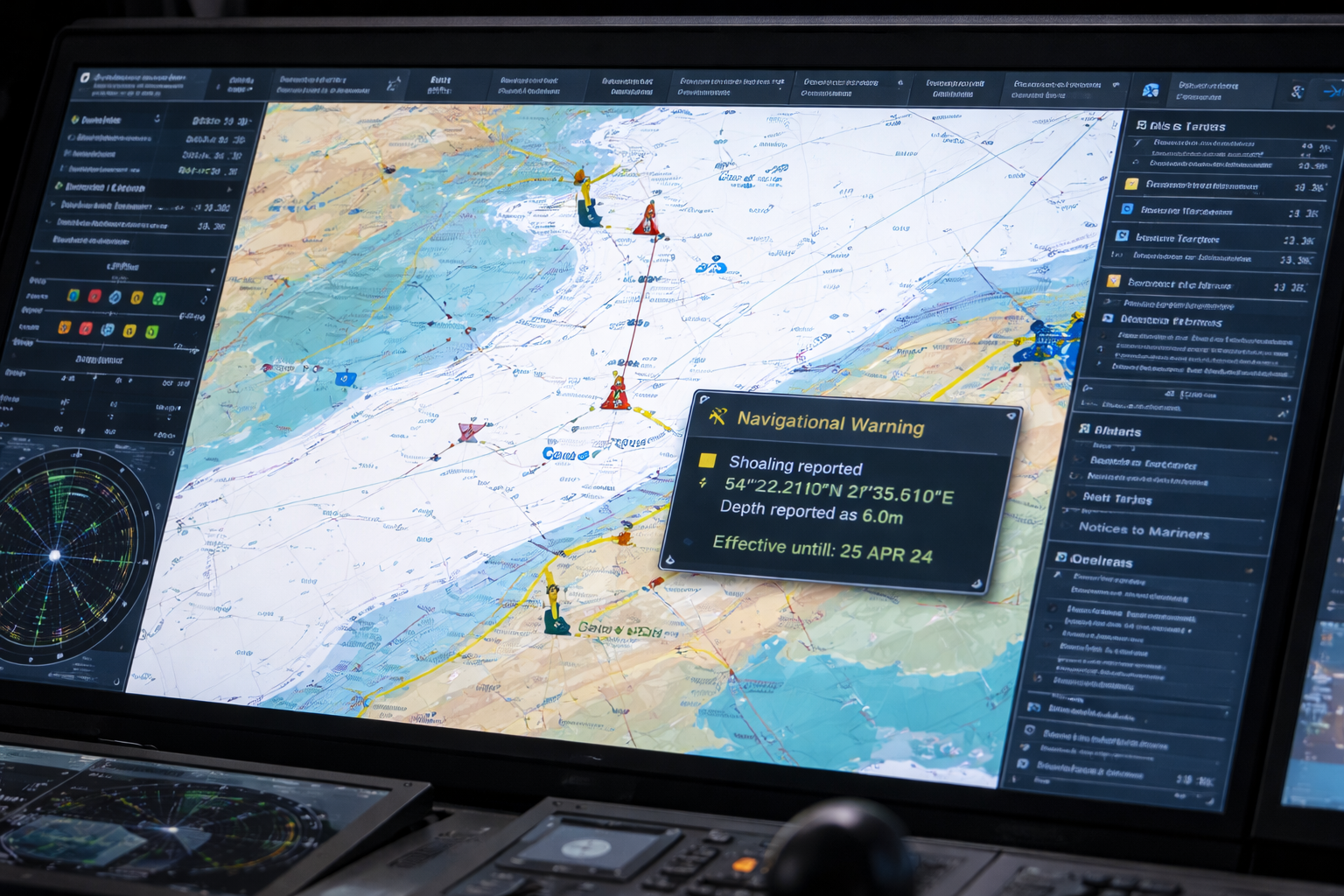
Hydrographic data for autonomous operations
(S-100 progress + “text remains”):
Hydrographic and navigational data remains a gating factor for autonomy. Even with S-100 and related standards improving machine-readable products, critical inputs are still often textual (descriptions, Notices to Mariners, navigational warnings), and hydrographic coverage can be incomplete in some regions. Speakers noted that source data diagrams / source metadata are key for supporting safe route/path generation. This is one area where LLMs can be useful (to extract and structure textual safety information) provided outputs remain conservative, traceable, and verified.
How SafeNav is already aligned:
SafeNav is an AI-powered navigation co-pilot that fuses vessel sensor data and applies COLREG-compliant decision support to help crews and remote operators prevent collisions and groundings.
SafeNav’s roadmap and system design map directly to the themes raised across both days of MASRWG, especially where the industry is looking for practical, certifiable, and operator-trustworthy solutions:
COLREG-compliant DSS + “good seamanship” behaviour: SafeNav’s core is a COLREG-aligned decision support system designed to recommend manoeuvres that are not only compliant, but also clear, early, and interpretable (avoiding ambiguous “micro-adjustments” that increase confusion in high-traffic waters). We’re building this with a focus on explainability: what rule(s) apply, what is the risk, and why this action reduces it.
Human–machine collaboration by design: MASRWG reinforced that autonomy adoption depends on human oversight and acceptance. SafeNav is built as a co-pilot for navigators and remote operators, reducing cognitive load through clear prioritisation, confidence indicators, and a strong “human in command” model (including easy operator override and transparent decision rationale).
Sensor fusion + disagreement handling + degraded modes: Real-world autonomy lives in a mixed data environment. AIS, radar, EO/IR, GNSS and other feeds don’t always agree or may be degraded. SafeNav is designed around multi-source fusion and explicit confidence handling, including data freshness checks, cross-validation between sensors, and safe degradation behaviour when inputs are uncertain (instead of silently assuming data is correct).
Trajectory generation + rule-based selection (planner as a tool, not the brain): The conference discussion around “off-the-shelf” approaches (e.g., Informed RRT*-style trajectory generation) aligns well with SafeNav’s architecture. Where we see strong fit is using a planner to generate candidate manoeuvres, while SafeNav’s core DSS applies COLREG constraints, risk scoring, and seamanship heuristics to select the safest and most operationally sensible option.
Auditability, accountability, and safety-case readiness: The accountability question (who is responsible, what evidence exists after an incident) is central to US and global adoption. SafeNav is being built to provide traceable decision logs (inputs, detected encounter type, applicable COLREG logic, confidence states, and the rationale behind each recommendation) supporting investigation, assurance cases, and operational governance.
Hydrographic data limitations + “text still matters” (S-100 + notices/warnings): We’re aligned with the reality that not all navigation-critical information is fully machine-readable yet. SafeNav’s roadmap anticipates integrating data quality / limitation awareness and structured ingestion of safety-relevant updates (including notices/warnings where available). The hydrographic discussion also reinforces the value of selectively using LLM-style tooling for extracting structured constraints from textual sources, while keeping outputs conservative, verifiable, and clearly linked back to source material.
US market focus: defence USV ROC + high-traffic coastal/harbour navigation: The “US market” discussion strongly matches one of SafeNav’s core focuses already. Defence-oriented USV/ASV applications, specifically remotely operated craft (ROCs), with emphasis on high traffic and coastal/harbour navigation where decision support, situational awareness, and operator workload reduction are especially valuable. This is not a new direction for SafeNav; it’s already a central part of our product and partnership strategy.
Interested in collaborating?
SafeNav is actively exploring collaboration opportunities, including joint projects, pilots, integration partnerships, funding opportunities, and investment conversations. If you’re working on MASS/USVs, autonomy assurance, bridge/shore-side operations, hydrographic data services, or defence and port applications, we’d welcome a conversation to compare notes and identify practical next steps.
Please reach out to info@safenavsystem.com.
---
Key words: Maritime Autonomous Surface Ships (MASS), autonomous shipping, autonomous vessels, uncrewed surface vessels (USV), autonomous surface vessels (ASV), remotely operated craft (ROC), remote operations center (ROC/shore control), human-in-the-loop autonomy, human–machine collaboration, AI navigation co-pilot, navigation decision support system (DSS), COLREG-compliant collision avoidance, COLREGs, collision avoidance algorithms, situational awareness, sensor fusion, multi-sensor data fusion, AIS, radar, EO/IR cameras, GNSS, degraded-mode operations, safety assurance, explainable AI (XAI), audit trail / decision traceability, cyber resilience, adversarial AI, trajectory planning, Informed RRT*, ports and harbour navigation, coastal navigation, high-traffic waterways, hydrographic data, IHO S-100, S-101 ENC, electronic navigational charts (ENC), Notices to Mariners, navigational warnings, route planning, grounding avoidance, maritime defence autonomy, dual-use maritime technology, US market maritime autonomy, MARAD, port infrastructure (PIDP).
